
The procurement concerns 8–9 meter-long, low-floor, diesel-powered buses, designed to accommodate at least 50 passengers and adapted for persons with disabilities. The interiors will be equipped with heating and air conditioning systems, USB ports, and information monitors.The buses are to be delivered to Rustavi in stages within 240 calendar days of the signing of the contract. The submission period for bids in the tender will open on October 29 and close on October 30.
1793102198

According to Geostat, international postal and courier services accounted for the largest share of revenue, at 67%, while domestic services accounted for 33.0%.Parcel deliveries generated 76.8% of the total revenue of postal and courier companies. Of this amount, 70.3% came from international shipments and 29.7% from domestic deliveries.Meanwhile, written correspondence accounted for 17.3% of the companies’ total revenue. International correspondence represented 57.8% of this category, while domestic correspondence accounted for 42.2%, according to the agency’s report.In 2025, postal and courier companies handled 16.4 million parcels and 7.0 million pieces of written correspondence.The average annual number of people employed by postal and courier companies stood at 4,600 in 2025, including 1,800 couriers and postal workers.
1792674406

The prices for mining and quarrying decreased by 0.1 percent compared to August 2026, resulting in a -0.01 percentage point contribution to the overall monthly PPI change. In the same period, the prices for manufactured products decreased by 0.1 percent, contributing -0.05 percentage points to the monthly index change. Besides, the prices increased for electricity, gas, steam and air conditioning by 0.4 percent, contributing 0.04 percentage points to the monthly index change.The annual PPI rate was mainly affected by price changes for the following products: Mining and quarrying: the prices were 12.6 percent higher, contributing 0.88 percentage pointsto the overall annual index change. Within the group, the prices were higher for the subgroup ofmetal ores (12.1 percent); Manufactured products: the prices increased by 4.1 percent, contributing 3.22 percentagepoints to the overall annual index increase. There was a notable increase in the prices for foodproducts (4.1 percent) and basic metals (8.5 percent); Electricity, gas, steam and air conditioning: the annual price increase amounted to 3.2 percent,which contributed 0.34 percentage points to the annual index change; Water supply, sewerage, waste management and remediation services: the annual priceincrease amounted to 5.8 percent, which contributed 0.18 percentage points to the annual indexgrowth.
1792496832

AAWE statistics show that in the first eight months of 2026, total US wine imports fell from $4,498 million to $3,786 million. The primary drivers of this global decline were the largest suppliers: imports from France dropped by $245.25 million (−13.8%), while those from Italy decreased by $240.34 million (−16.5%). Significant percentage declines were also recorded among other leading producers: Australia: −33.5% (to $100.68 million) Chile: −34.0% (to $71.32 million) Argentina: −25.2% (to $98.62 million) South Africa: −33.1% (to $15.99 million) Among the top 30 suppliers, the sharpest declines were seen in Moldova (−81.5%) and the United Kingdom (−79.8%). New Zealand remained relatively stable, with a decline of 5.3% ($302.44 million).Against the backdrop of an overall negative trend, only a few smaller suppliers showed growth. These include Lebanon (+23.4%), Switzerland (+11.8%), the Dominican Republic (+6.2%), Georgia (+2.1%) and Slovenia (+2.1%).As a result, Georgia moved to 16th place among countries exporting wine to the U.S. (up from 18th position the previous year).
1792496663
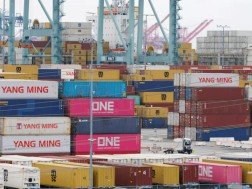
In the period from January to September 2026, the top ten destination countries accounted for 62.8% of Georgia’s total domestic exports. In this regard, the largest export partners are: China – $566.8 million Russia – $523.2 million Turkey – $323.1 million In the period from January to September 2026, oil and petroleum products rank first among the top ten categories of domestic exports, amounting to $762.6 million, a share of 20.3% of total domestic exports. Ores and concentrates of precious metals rank second with $464 million (12.4% of total domestic exports), while ferroalloys occupy third place with $239 million (6.4% of total domestic exports).
1792409537
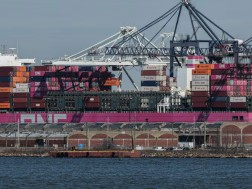
In January–September 2026, the ten largest export partner countries accounted for 67.8% of Georgia’s total exports. The top three export destinations were as follows: Kyrgyzstan – $650.2 million China – $583.1 million Azerbaijan – $566.7 million In January–September 2026, the ten largest import partners accounted for 69.2% of Georgia’s total imports. The top three are: Turkey – $2.18 billion China – $1.74 billion USA – $1.71 billion In January–September 2026, the ten largest trading partners accounted for 64.8% of Georgia’s total foreign trade turnover. The country’s largest trading partners are: Turkey – $2.54 billion China – $2.329 billion Russia – $2.21 billion According to Geostat data, for the period of January–September 2026, passenger cars ranked first among commodity groups in the top ten exports, amounting to $1.52 billion - which accounts for 24.9% of total exports. Oil and petroleum products rank second with $811.8 million (13.2% of total exports), while ores and concentrates of precious metals rank third with $464 million (7.5%).The largest import commodity group in January–September 2026 consisted of passenger cars, with imports amounting to $2.65 billion or 18.4% of total imports. Oil and petroleum products rank second with $1.4 billion (9.8% of imports), while packaged medicinal products rank third with $526.8 million (3.7% of imports).
1792409397
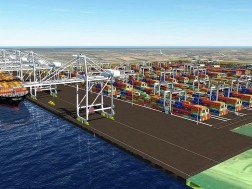
“Georgian Railway plans to build a railway line of approximately 17.74 km in Anaklia, along with a new station, a railway junction and other related infrastructure,” the company said in a statement.Consultancy firms interested in supervising the design and construction of the new rail link can submit applications until 17:00 on 17 November 2026.
1792409044

In 2025, the adjusted hourly gender pay gap was 20.1% in the industrial sector and 10.9% in the service sector.Broken down by occupation/position, the adjusted hourly gender pay gap was highest among "plant and machine operators and assemblers," reaching 30.2%, followed by "technicians and associate professionals" (23.5%).
1792151112

In 2025, the median wage was 29.3% lower than the average monthly wage.By economic activity, the highest median wages in 2025 were recorded in the following sectors: Public administration and defense; compulsory social security – 2,501 GEL; Construction – 2,328 GEL; Mining and quarrying – 2,264 GEL; Information and communication – 2,250 GEL; Financial and insurance activities – 2,211 GEL. According to Geostat data for 2025, the median wage lags behind the average monthly wage across all sectors.
1791548081

In 2025, earnings increased in almost all sectors compared to the previous year. The highest average monthly earnings were observed in the following economic activities: Financial and Insurance Activities – 4 123.6 GEL (increased by 12.1 percent compared to the previous year); Information and Communication – 4 042.6 GEL (increased by 3.0 percent compared to the previous year); Construction – 3 026.1 GEL (increased by 13.5 percent compared to the previous year). In 2025, the average monthly earnings of women amounted to 1 743.4 GEL, while those of men amounted to 2 586.5 GEL. Compared to the previous year, women's earnings increased by 151.8 GEL (9.5%) and men's earnings by 245.9 GEL (10.5%). In almost all sectors of economic activity, men's average monthly earnings were higher than women's.In 2025, the average monthly earnings of employees in the business sector increased by 173.9 GEL (8.6%) and amounted to 2 198.4 GEL. The highest average monthly earnings by economic activity were observed in the Information and Communication sector (4 097.1 GEL, increased by 2.2 percent compared to the previous year) and in the Professional, Scientific and Technical Activities sector (3 340.7 GEL, increased by 6.1 percent compared to the previous year).In 2025, the average monthly earnings of employees in the non-business and financial sector are 233.7 GEL (12.5%) higher than in the previous year and amount to 2 100.5 GEL. By economic activity, employees in the Financial and Insurance Activities sector have relatively high earnings.
1791548012

Bank of Georgia Named World's Best AI Bank 2026 by Global Finance
1792070497
Askaneli Group Opens 5-Star Hotel Complex in Kakheti with TBC’s Suppor...
1792409771
Expression of interest launched for Anaklia Deep Sea Port rail link su...
1792409044
Petroleum Products Account for 20.3% of Domestic Exports – Geostat
1792409537
The financial sector generated GEL 13.8 BLN in revenue in 2025 – Geost...
1792070558