
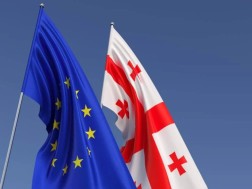
The new projects that will continue to make a real difference in the lives of families and communities across Georgia: Economic opportunities in small cities and towns Skills for a changing labour market Socio-economic development in rural areas, especially driven by women Better access to markets and better food quality Actions to combat violence towards women and girls Safe and orderly migration Climate adaptation and disaster preparedness Continued support for communities in Abkhazia
1792151028
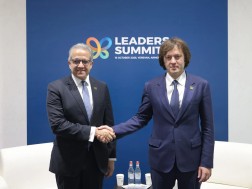
The meeting, held in Yerevan on the sidelines of the 17th Conference of the Parties to the UN Convention on Biological Diversity (COP17), touched upon bilateral relations between the two countries. The parties highlighted positive cooperation in tourism.According to the Government Administration of Georgia, the meeting also focused on the regional security situation. The Georgian Prime Minister reiterated the vital importance of dialogue and diplomatic engagement in achieving de-escalation and ensuring lasting peace.
1792150957
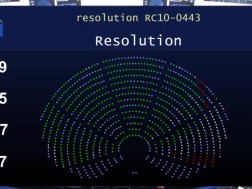
MEPs call on the EU and its member states to impose targeted personal sanctions and visa restrictions on individuals responsible for democratic backsliding, violent repression and political persecution. The resolution specifically names Bidzina Ivanishvili, Irakli Kobakhidze, Shalva Papuashvili and Kakha Kaladze. The document also refers to the constitutional lawsuit filed in November 2025 by the Georgian Parliament seeking to ban opposition parties, including the United National Movement, Coalition for Change and Strong Georgia – Lelo. The Federalists were subsequently added to the case, while For Georgia, described in the resolution as the only opposition party represented in Parliament, was added in September 2026.According to the resolution, the European Parliament also calls for: the immediate release of all political prisoners and those detained for peaceful protests, including Elene Khoshtaria, 2025 Sakharov Prize laureate Mzia Amaglobeli, Mikheil Saakashvili, Giorgi Baramidze and Nika Melia; the dropping of charges in politically motivated “sabotage” cases; the repeal of provisions allowing disproportionate restrictions on banned parties and individuals; an end to the use of legislation and state institutions to silence political opponents; the removal of obstacles facing European political foundations, including the Konrad Adenauer and Friedrich Naumann foundations. The resolution describes the situation in Georgia as increasingly deteriorating in terms of democracy, media freedom, human rights and the rule of law. MEPs characterize the attempts to ban opposition parties as part of what they describe as a broader Georgian Dream strategy to establish a one-party regime by eliminating political pluralism, comparing it to the models of Russia and Belarus. The European Parliament also reiterates its support for the Georgian people’s European aspirations and recalls its previous warnings that banning existing political parties would move Georgia away from the EU and hinder any steps toward EU membership. It also rejected two amendments submitted by Tomasz Froelich and Petar Volgin that sought to remove references to the alleged one-party strategy and targeted sanctions from the resolution.
1791463968
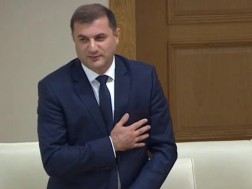
Prime Minister Irakli Kobakhidze submitted Borashvili’s candidacy to the legislature on September 14. Prior to this appointment, Borashvili served as the Deputy Head of the State Security Service. He replaces Geka Geladze, who announced his resignation on September 14 and will continue his career as a Deputy Minister of Internal Affairs.Under the law, the Parliament elects the Head of the State Security Service for a six-year term; however, the issue of appointing the agency's leader has appeared on the parliamentary agenda four times in the last year and a half. Tamaz Borashvili is the sixth person to hold the position of Head of the State Security Service. Heads of the State Security Service and the chronology of personnel changes: Vakhtang Gomelauri (August 1, 2015 – September 8, 2019) – The first head of the newly separated agency (over 4 years). Grigol Liluashvili (October 17, 2019 – April 2, 2025) – The longest-serving head (over 5 years). Anri Okhanashvili (April 4, 2025 – August 23, 2025) – Held the position for less than 5 months. Mamuka Mdinaradze (September 3, 2025 – April 21, 2026) – Led the agency for approximately 7 months. Geka Geladze (April 21, 2026 – September 14, 2026) – Left the position in less than 5 months.
1789561038
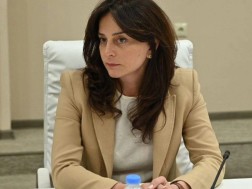
“Maia Bitadze is distinguished by her integrity, which was the primary criterion on which she was asked to assume the post of Minister of Culture,” Georgia’s Prime Minister Irakli Kobakhidze stated during a press briefing at the Government Administration.According to Kobakhidze, Bitadze possesses exceptional, long-standing managerial experience.“I would like to inform you that Mrs Maia Bitadze was today appointed as Georgia’s Minister of Culture. She requires no special introduction to the public. I want to emphasise that Mrs Maia possesses exceptional, long-standing managerial experience. For many years, she has held various high-ranking positions. Among other roles, she served for years as Deputy Minister of Environmental Protection and Deputy Mayor of Tbilisi, during which time she also oversaw the culture portfolio. Since 2020, Mrs Maia Bitadze has been a Member of the Parliament of Georgia and Chair of the Parliamentary Committee on Environmental Protection and Natural Resources. She holds a Doctorate in Law and is an Associate Professor at Tbilisi State University. Her integrity is exemplary, and this served as the principal criterion for inviting Mrs Maia to take up the position of Minister of Culture of Georgia. I am confident that Mrs Maia will be a highly successful Minister of Culture. I wish her great success,” stated the Prime Minister.Bitadze previously served as the Chair of the Parliamentary Committee on Environmental Protection and Natural Resources. Between 2011 and 2020, she held key public offices, serving as Deputy Minister of Environmental Protection followed by a term as Deputy Tbilisi Mayor.For context, the post of Culture Minister became vacant on 28 July after Tinatin Rukhadze’s resignation.
1789472488
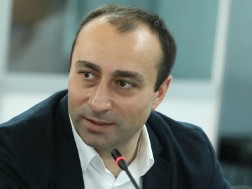
Geladze said in his resignation address that he will transition to a new role within the state apparatus, following consultations with the ruling political leadership.“I have decided to step down from the post of Head of the State Security Service of Georgia. Following consultations with the political team, I will continue my service in another agency, where I will continue to serve the interests of our country and society with full dedication.Serving as Head of the State Security Service was an immense responsibility and a profound privilege. Throughout this period, every officer and member of the agency worked collectively to address state challenges, bolster Georgia’s security, and protect our national interests.I wish to extend my special gratitude to every employee of the State Security Service for their professionalism, devotion, and the crucial work they perform daily to ensure our nation’s security.I express my gratitude to the political team, particularly to the Honorary Chairman of the party, Bidzina Ivanishvili, and Prime Minister Irakli Kobakhidze, for the trust reposed in me. I am confident that the State Security Service will continue to carry out its paramount responsibilities with distinction and safeguard the security of our nation,” Geladze’s statement reads.
1789383540
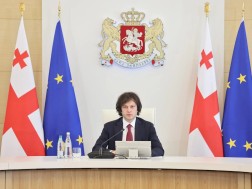
“The situation in Germany is quite difficult in terms of economy. Over the past three years, a recession has been observed overall, that is, a decline in the economy. All this naturally affects the mood of the population. Everyone sees that the government does not have the resources to manage processes properly, they do not have sufficient sovereignty for this,” Kobakhidze told journalists in Batumi.According to the Prime Minister, the economic situation in Germany is also reflected in the mood of the country’s voters, and one of the manifestations of this is the elections held in the state of Saxony-Anhalt.“This is reflected in the fact that the opposition party won in one of the federal subjects, the state of Saxony-Anhalt,” he said, noting that he does not intend to interfere in the choice of the German people.What do economic statistics show?Part of Kobakhidze’s statement concerns the dynamics of the German economy in recent years. According to official statistics, Germany’s real GDP decreased by 0.9% in 2023 and by 0.5% in 2024. In 2025, the economy showed growth of 0.2%. Accordingly, the assessment of the entire period of the last three years as a “recession” is not accurate, although the German economy shrank for two consecutive years in 2023-2024.Amid economic difficulties, the German government is trying to stimulate growth. Chancellor Friedrich Merz has set a target of at least 1% economic growth by 2027, while the current forecast by the Ministry of Economics is for 0.5% growth by 2026.Saxony-Anhalt elections and AfD victoryKobakhidze described the results of the Saxony-Anhalt elections as a victory for the opposition, although the AfD – the Alternative for Germany – party that came first in the elections is not a typical opposition force in the country’s political spectrum.In the September 6 elections, the AfD received around 44% of the vote, achieving an unprecedented result for a German far-right party in regional elections since World War II. The ruling CDU received around 17%. Despite its victory, the AfD does not have an absolute majority, and the issue of coalition partners to form a government remains a problem.Speaking about the results of the German elections, Kobakhidze stated that "they should draw their own conclusions about the rest" and that Georgia does not intend to interfere in the choice of the German people.
1788780931

According to the statement, Girchi has always been a party of free people.“We originally named ourselves ‘Girchi’ [Pinecone] to encapsulate the concept of liberty within a neutral, everyday symbol that would be easy for people to remember. In that respect, it was perhaps overly successful, given that in recent years two separate political factions have adopted the same name, despite neither having any genuine connection to liberty.Our opponents have exploited this confusion to the full, attributing various alien positions and statements to us. On occasion, individuals with no connection to our movement or to the cause of freedom have been falsely portrayed as our allies or activists.All of this creates a distorted impression among the public and undermines the foundational principles upon which our party was established. We have decided to put an end to this ambiguity and turn over a new leaf in our political journey by naming ourselves what we truly are, always have been, and will continue to be: the Free People’s Party,” the statement read.
1788779815
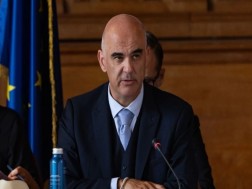
As Vesti.az reports, Berset stated that Europe’s geopolitical center is shifting eastward along the 39th parallel north, and this axis passes through four Council of Europe member states – Azerbaijan, Armenia, Georgia and Turkey.“Europe’s geopolitical center is shifting eastward, along the 39th parallel north. This axis passes through four member states,” Berset said.Georgia's Growing Role in European SecurityAccording to the Secretary General of the Council of Europe, Georgia, Azerbaijan, Armenia and Turkey are located at the intersection of several important geopolitical processes at the same time.According to him, these processes include the war in Ukraine, conflicts in the Middle East, as well as the ongoing political and economic changes in Central Asia, the scale of which Europe has not yet fully understood.In this context, Georgia's location is particularly important, as the country represents one of the important connecting links between Europe and the South Caucasus and participates in the transport, energy and trade processes taking place in the region.Relations between Baku and YerevanBerse also paid special attention to relations between Azerbaijan and Armenia.According to him, one year after the signing of the Washington Declaration, Baku and Yerevan have a real opportunity to turn the progress achieved into sustainable peace.In addition, he said, Armenia and Turkey have also taken steps towards normalizing relations.European security is unthinkable without TurkeyThe Secretary General of the Council of Europe also emphasized the special role of Turkey. Turkey is the most numerous state among the member states of the Council of Europe and has the second largest armed forces among NATO members.“A serious discussion on security, including democratic security, on this continent is impossible without Turkey,” said Berce.In his assessment, an agreement between governments alone is not enough for sustainable peace. This requires trust between societies, respect for human rights and the existence of institutions that can support the reconciliation process.Berce also warned the member states of the Council of Europe that the strength of the common European legal space depends on the equal observance of its norms by all states. He said that this also requires trust, transparency and the absence of double standards.
1788436348
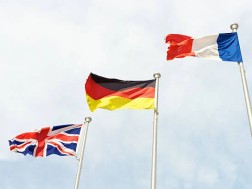
As stated in the joint declaration, the Foreign Ministries reaffirm their full support for Georgia’s sovereignty and territorial integrity within its internationally recognised borders.“August 7th is a date when we remember the grave consequences of Russian imperialism. On this day in 2008, the Russian Federation took military action against Georgia, further damaging Georgia’s territorial integrity by occupying the Georgian regions of Abkhazia and South Ossetia.18 years after the Russian aggression, we reaffirm our full support for the sovereignty and territorial integrity of Georgia within its internationally recognised borders. We welcome the Republic of Naoero’s decision to withdraw its recognition of the so-called independence of Abkhazia and South Ossetia. We urge states that have established diplomatic relations with these entities to follow this example.We reiterate our condemnation of Russia’s ongoing military presence in the occupied breakaway regions of Abkhazia and South Ossetia in violation of international law as well as Russia’s obligations under the six-point agreement of 12 August 2008. Russia’s ongoing militarisation of Georgia’s occupied territories poses a serious threat to the security of Georgia and to regional and European stability.In October 2025, the European Court of Human Rights found the Russian Federation guilty of many violations committed in the occupied breakaway regions, including excessive use of force, ill-treatment, unlawful detention and unlawful restrictions on day-to-day movement across the administrative boundary line between Georgian-controlled territory and Russian-occupied territory. We urge Russia to implement the rulings of the European Court of Human Rights relating to this situation and to fully fulfil the commitments it made on August 12 and September 8, 2008,” the statement reads.Furthermore, the Foreign Ministries of France, Germany, Italy, and the United Kingdom expressed grave concern over the recent agreement signed between Moscow and the de facto authorities of South Ossetia, describing it as a clear violation of international law.“We are concerned about the latest developments in South Ossetia. The “Agreement on Deepening Alliance and Cooperation” signed on May 9, 2026, between Moscow and the de facto authorities of South Ossetia further violates Georgia’s sovereignty and territorial integrity, in clear breach of international law. This document, as well as the appointment of a Russian citizen to head the region, raises concerns about a possible full-fledged annexation of the region, which would not go unanswered.We reaffirm our support for the “Geneva International Discussions” (GID) platform, co-chaired by the European Union, the OSCE, and the United Nations. This is the only framework that will enable the parties to work towards conflict resolution. We commend the work of the European Union Monitoring Mission in Georgia (EUMM), and we will continue to support the role of the mission,” the joint statement concludes.
1786103517
European Parliament Resolution Calls for Sanctions on Georgian Dream L...
1791463968
Bank of Georgia Named World's Best AI Bank 2026 by Global Finance
1792070497
1,531 GEL: Median salary in Georgia increased by 14.9%
1791548081
NBG Governor the Minister of Finance will meet with investors from J.P...
1791804462
Geostat: In 2025, the average monthly nominal wage up by 9.9% to 2,165...
1791548012