

Updated population census data: Geostat used a hybrid model and the pr...
According to the international methodology, all citizens of Georgia
permanently residing in the country, as well as foreign citizens and
stateless persons residing in the country, were subject to the census.
The reference time for population enumeration (the critical moment of
the census) was midnight (12:00 AM) between November 13 and 14,
according to which the facts were registered.During the census, data
were collected electronically, using modern technologies. The process
was carried out in two stages: in the first stage (November 14-23,
2024), the self-enumeration method (computer-assisted web-interview -
CAWI) was used, and in the second stage (November 29 - December 31) -
the computer-assisted personal interview method (CAPI).Based on high
demand from the population, data collection using CAWI method was
additionally extended throughout December. Considering that in some
mountainous, hard-to-reach municipalities and/or settlements the
conduct of fieldwork would be complicated during November-December due
to possible deterioration of the weather and difficult meteorological
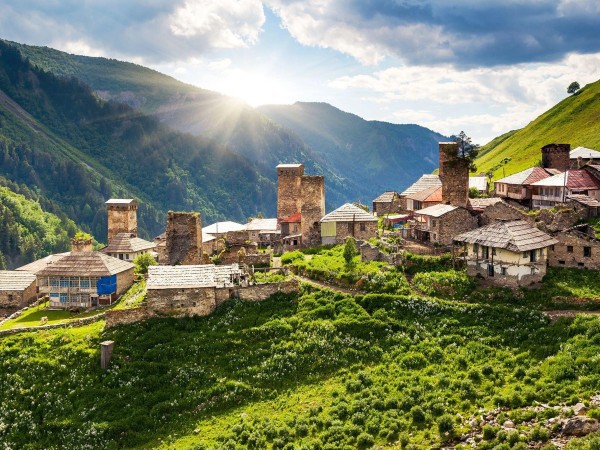
condition, the population census was conducted in September 2024
(namely, in the municipalities of Mestia, Kazbegi, Lentekhi, partially
Akhmeta (Omalo administrative unit) and Dusheti (Gudamakari,
Magharoskari, Ukanapshavi, Kvesheti, Shatili and Khevsureti
administrative units and villages included in the Pasanauri
administrative unit)).It should also be noted that the preliminary
results of the census, covering the number of population by regions,
self-governing units, type of settlement (urban/rural) and sex, were
published at the end of June 2025.Based on the final results, the
population of Georgia as of November 14, 2024, amounted to 3,929,581
persons, that is 0.4 percent higher compared to the figure published
in June, 2025 (3,914,000 persons).52 percent of population (2,048,577
persons) are women, and 48 percent (1,881,004 persons) are men. The
share of women is relatively high in Tbilisi and Kutaisi (54 percent),
and relatively low in Keda, Khelvachauri, Kharagauli, Sagarejo and
Marneuli municipalities (49 percent).According to the census data, as
of November 14, 2024, 62 percent of population (2,442,231 persons)
lives in urban settlements, and 38 percent (1,487,350 persons) - in
rural settlements. The share of the population living in urban
settlements, by regions (except Tbilisi) is high in the Adjara A.R.
(67 percent), which is due to the high number of Batumi population.
The share of the urban population is relatively low in the regions of
Mtskheta-Mtianeti, Kakheti, and Racha-Lechkhumi and Kvemo Svaneti,
amounting to 24 percent.The largest share of the population in Georgia
is 35-39 age group (7.6%), followed by 10-14 (7.4%), and 30-34 age
groups (7.2%). It should also be noted that the share of women is
particularly high in the population aged 85 and over. In this age
group, the number of women is 2.6 times higher than the number of
men.According to the census data, 1,331,485 persons live in c. Tbilisi
that is 34 percent of the country's population. The second and third
largest regions in terms of population are Imereti (510,741 persons)
and Kvemo Kartli (441,630), with 13 and 11 percent of the population,
respectively.
1776860775