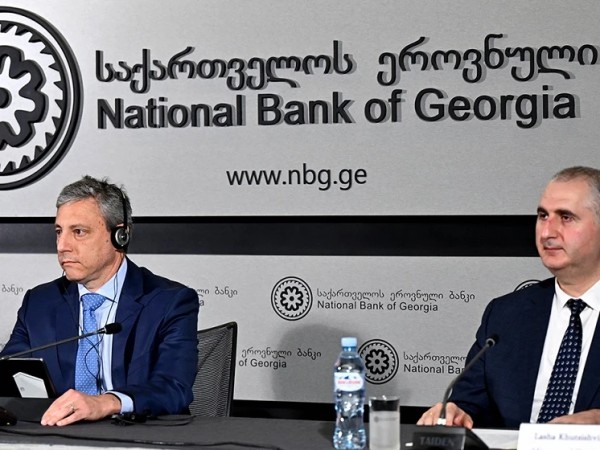
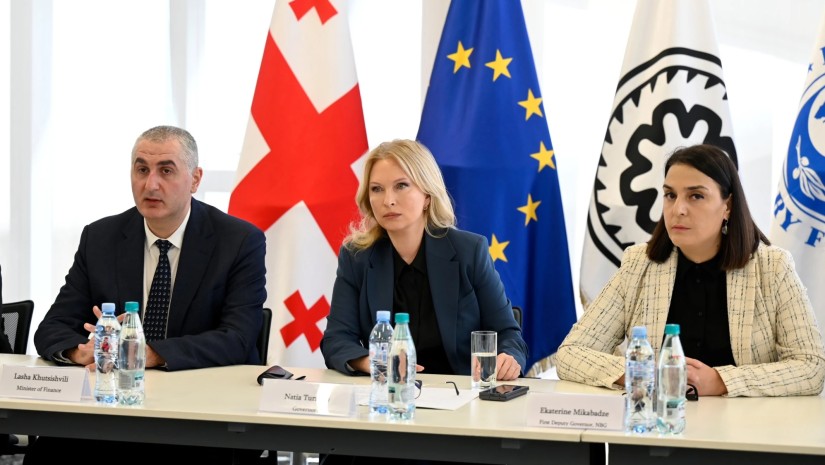

Tbilisi (GBC) – In response to journalists’ questions at the IMF mission summary briefing, NBG President Natia Turnava and Finance Minister Lasha Khutsishvili stated that the Development Bank of Georgia will not be a banking institution in the classical sense and, accordingly, will not be supervised by the National Bank. It will be a kind of support instrument, a fund-like structure, which is also practiced in other countries.
According to the Finance Minister, the title of a bank is an incorrect definition for this instrument. According to him, the presentation of this structure will clarify what mandate this fund will have and what functional load it will have.
Alejandro Hagenberg, the head of the International Monetary Fund mission, stated at today's summary briefing regarding the institution that "such an institution exists in many countries, there are also very bad examples in the world, and it is important that it is done correctly if it is to be done. There must be logic in the existence of a development institution - the transparency of this bank will be important".
A development bank is a financial institution created by the state or with the participation of the state, the purpose of which is to provide long-term and preferential financial resources to strategic sectors - infrastructure, industry, export, energy, agribusiness and small and medium-sized businesses.
In world practice, such institutions play an important role in stimulating economic growth. For example, in Germany, KfW operates, which has become one of the main financial instruments for the country's reconstruction after World War II. In Brazil, BNDES operates, which plays a leading role in financing industry and large infrastructure projects.
The idea of establishing a development bank in Georgia has been discussed periodically at the economic policy level for years, especially when the private banking sector has been talking about a shortage of long-term and low-interest resources. The issue becomes active during periods of economic slowdown, regional challenges, or the need to finance large infrastructure projects.
Supporters of the initiative say that the development bank will contribute to:
- Financing long-term investment projects
- Export growth
- Support for local production
- Development of strategic infrastructure
However, critics point to risks, including politicization, ineffective management, and the possibility of increasing public debt. International experience shows that the success of such an institution largely depends on transparent governance, a clear mandate, and strong oversight mechanisms.