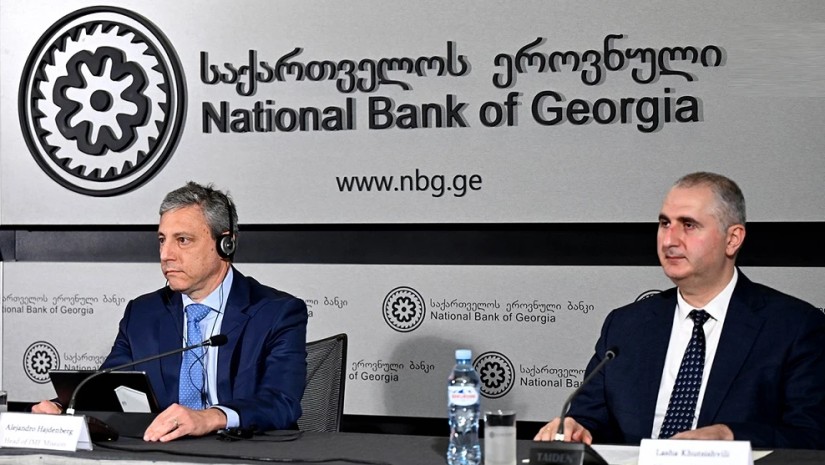

Tbilisi (GBC) - The International Monetary Fund (IMF) mission, led by Alejandro Heidenberg, held discussions with Georgia under the 2026 Article IV consultation from March 25 to April 7, 2026, after which it issued a concluding statement.
The IMF said inflationary pressures have increased since the outbreak of the conflict in the Middle East, but core inflation remains low. Inflation was 4% at the end of 2025 and reached 4.3% in March 2026, reflecting rising prices for imported food and oil, partly due to the ongoing war in the Middle East. At the same time, core inflation remains below the National Bank of Georgia’s (NBG) 3% target.
According to the IMF’s forecast, inflation will remain high in the first half of 2026, driven by rising fuel and electricity prices, and will return to the target by mid-2027, as the effects of one-off increases in food and energy prices are offset, demand declines moderately, and the output gap closes.
In line with the IMF’s recommendation, monetary and exchange rate policies should remain focused on ensuring that inflation returns to the target in a sustainable manner. “While the current policy framework accommodates temporary supply-side shocks, the National Bank of Georgia has rightly signaled its readiness to tighten policy if inflationary pressures persist, second-round effects emerge, or inflation expectations become fixed”.
The IMF also responds to the interventions, noting that exchange rate flexibility should be maintained and foreign exchange interventions should be limited to mitigating episodes of excessive volatility. They also say that, where possible, continuing to accumulate international reserves would further strengthen precautionary buffers in the face of Georgia’s high dollarization.
Progress on the governance reform of the National Bank of Georgia remains important to strengthen institutional safeguards. The financial institution says most of the recommendations of the IMF’s 2022 Security Assessment have already been implemented, including the removal of discretionary transfers to the government, and IMF technical assistance has facilitated further progress.
“Steps have already been taken, including the redistribution of responsibilities among executive members and the strengthening of the succession system for the President of the National Bank, which is positively assessed. The authorities also plan to reform the mechanisms for collegial decision-making and the qualification requirements for Board members. Further strengthening of the Board’s oversight mechanisms is important to ensure that the National Bank’s governance framework is fully consistent with international best practices,” the IMF said.
It should be recalled that the monetary policy was set at 8% in May 2024 under the previous President of the National Bank, Koba Gvenetadze, and since then, under the current President, Natia Turnava, the Committee has not changed its decision.