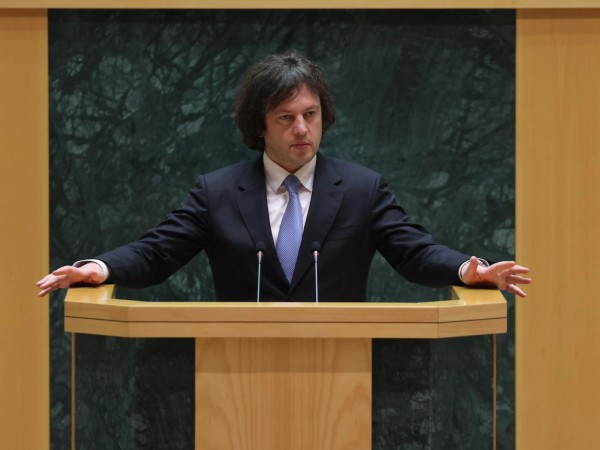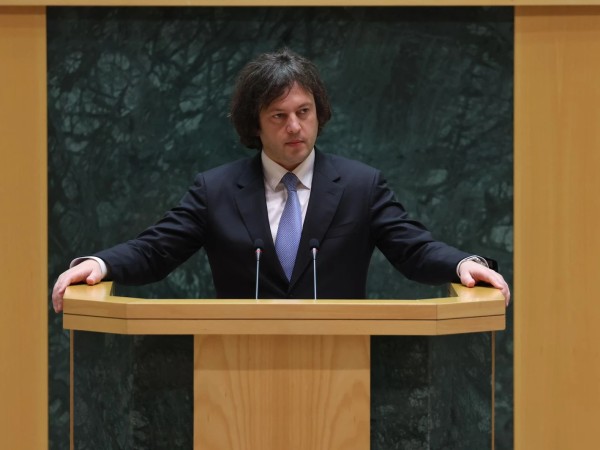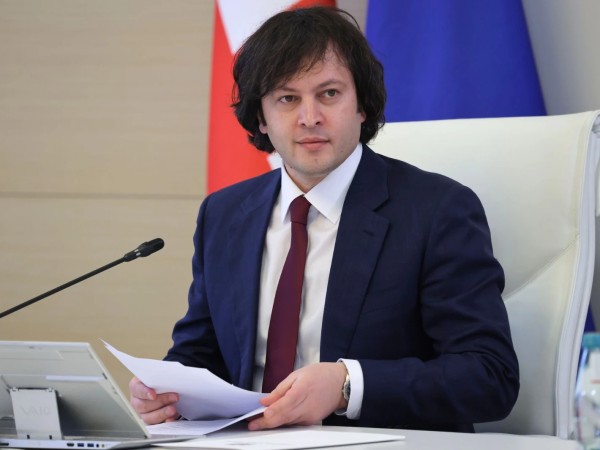
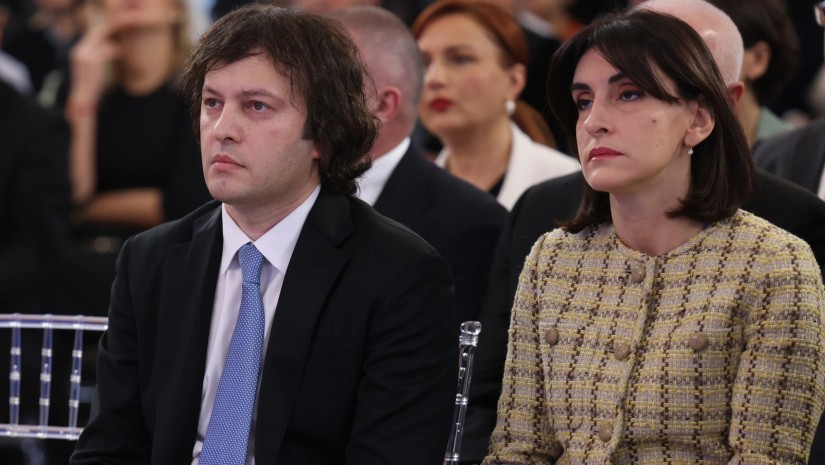

Tbilisi (GBC) - Professors from 65 leading universities around the world are calling on Irakli Kobakhidze to reconsider his concept of higher education reform. The letter, addressed to Kobakhidze, states that the concept proposed by "Georgian Dream" will not solve the problems and, on the contrary, will be harmful.
"We urge the government to rethink this educationally harmful proposal and to engage with all
stakeholders in Georgia’s higher educational system" - This is stated in the letter from foreign professors to Irakli Kobakhidze, Prime Minister of Georgia.
"On October 16, you announced a National Reform Concept for Higher Education, consisting of seven major components. In this document and in your speech, you and your government assure Georgian citizens that the National Reform Concept will improve efficiency and quality in Georgian higher education and promote equal access for students. We agree there are longstanding problems in the Georgian higher educational system: universities and institutes are nder-resourced (in 2025, Georgian government spending on higher education was 0.3% of GDP); faculty are underpaid, working two to three jobs to feed their families; government supported research and scientific laboratories have become practically non-existent; and unemployment among university graduates stimulates a massive out-migration abroad every year.
The measures you propose in the National Reform Concept for Higher Education will not solve any of these problems. Rather, they will increase government control over the higher educational sector. Management will be placed in the hands of rectors and administrators beholden to the government. University autonomy, and with it, faculty control over academic programs and curricula will be severely weakened. University budgets will be reduced even further, and the removal of dissenting faculty will become easier as part of the reorganization. The “reform” will close the last sphere in Georgia which is open to healthy dissent. A well-functioning university system which incorporates critical thinking, selfgovernment, academic freedom, well-funded research opportunities, and international exchange is vital to growing the Georgian national economy. Without universities where information is freely shared and research freely pursued, the Georgian economy will not thrive.
We are international scholars from universities around the world. We are concerned about other measures undertaken by your government which have led to the imprisonment of faculty and students for peacefully defending their rights. Your proposed National Reform Concept for Higher Education will not only nullify Georgia’s democratic progress but will limit the prospects of your citizens, who you were elected to represent. Higher education provides the state with engaged citizens and professionals, who along with working people, will ensure the country’s survival and prosperity in an increasingly competitive global order.
We urge the government to rethink this educationally harmful proposal and to engage with all stakeholders in Georgia’s higher educational system to create a genuine reform that will improve the lives of Georgian citizens and those of their children", - It is stated in the letter signed by:
1. Professor Stephen Jones, Davis Center, Harvard University
2. Professor Ronald Suny (Emeritus), University of Michigan, University of Chicago
3. Professor Erik R. Scott, University of Kansas
4. Prof. Dr. Hubertus Jahn (Emeritus), University of Cambridge
5. Professor Catriona Kelly FBA, Senior Research Fellow, Trinity College, University of Cambridge
6. Prof. Dr. Ulf Brunnbauer, Leibniz Institute for East and Southeast European Studies, Regensburg (Germany)
7. Professor Kelly O'Neill, Harvard University
8. Professor Roy Allison, St. Antony's College, University of Oxford
9. Professor Donald Rayfield (Emeritus), Queen Mary College, University of London
10. Professor Stephen Neil MacFarlane (Emeritus), University of Oxford
11. Lincoln Mitchell, Columbia University
12. Professor Florian Mühlfried, Ilia State University
13. Professor Paul Manning, Trent University, Canada
14. Professor Maia Chankseliani, University of Oxford
15. Professor Charles Urjewicz (Emeritus) (INALCO, Paris, France)
16. Professor Oliver Reisner, Ilia State University Tbilisi
17. Professor Michael Rochlitz, University of Oxford /Director of the Oxford Georgia Programme
18. Dr Alexander Morrison, Fellow and Tutor in History, New College, Oxford
19. Professor Jeremy Smith, University of Eastern Finland
20. Professor Guido Hausmann, Leibniz Institute for East and Southeast European Studies
21. Professor Edmund Herzig, Professor of Persian Studies, University of Oxford
22. Professor Bruce Grant, New York University
23. Professor Jonathan Wheatley, Oxford Brookes University
24. Professor Mirja Lecke, University of Regensburg, Germany
25. Ambassador William Courtney (US, Retired)
26. Ambassador Kenneth Yalowitz (US, Retired)
27. Professor Timothy Blauvelt, Ilia State University
28. Professor Julie George, CUNY and Columbia University
29. Professor Robert Kindler, Freie Universität Berlin
30. Prof. Dr. Theocharis Grigoriadis, Freie Universität Berlin
31. Dr Tamara Dragadze, Visiting Professor, University of Westminster
32. Professor Michael David-Fox, Director, Center for Eurasian, Russian and East European Studies, School of Foreign Service, Georgetown University
33. Dr Michel Abeßer, Assistant Professor, University of Freiburg, Germany
34. Prof. Dr. Stefan Applis (Friedrich-Alexander University Erlangen-Nuremberg)
35. Prof. Dr. Matthias Theodor Vogt, Dr. h.c. (Pécs University), Dr. h.c. (Ilia State University Tbilisi), Director Institut für kulturelle Infrastruktur Sachsen
36. Dr Michael H. Cecire, Affiliated Scholar, Center for Eurasian, Russian and East European Studies, Georgetown University
37. Professor Dan Healey (Emeritus), University of Oxford
38. PD. Dr. Kirsten Bönker, Nordost-Institut an der Universität Hamburg
39. Professor Anne Meneley, Trent University
40. Prof. Dr. Susanne Frank, Humboldt University of Berlin
41. Prof. Dr. Riccardo Nicolosi, LMU University Munich
42. Dr Riccardo Mario Cucciolla (University of Naples l'Orientale, Naples, Italy)
43. Professor Alex Krouglov, UCL SSEES (University College London, School of Slavonic and East European Studies)
44. Lesia Rubashova, Assoc. Professor, Research and Educational Center of Foreign Languages, National Academy of Sciences of Ukraine
45. Dr Rasmus Nilsson, Lecturer, UCL SSEES (University College London, School of Slavonic and East European Studies)
46. Dr Peter Braga, Lecturer, UCL SSEES (University College London, School of Slavonic and East European Studies)
47. Prof. Dr. Thomas Ertl, Freie Universitaet, Berlin
48. Prof. Dr. Marc Junge, University of Erlangen, Germany, department for Eastern European history
49. Professor Pamela Davidson, Russian literature, UCL SSEES (University College London, School of Slavonic and East European Studies)
50. Dr. Philipp Christoph Schmädeke CEO Akademisches Netzwerk Osteuropa, akno
e.V., Director SCIENCE AT RISK Emergency Office
51. Professor Richard Mole, Political Sociology, UCL SSEES (University College London, School of Slavonic and East European Studies)
52. Olivia Bailey, language coordinator, UCL SSEES (University College London, School of Slavonic and East European Studies)
53. Dr Jessie Barton Hronesova, Lecturer, UCL SSEES (University College London, School of Slavonic and East European Studies)
54. Dr Jakub Beneš, UCL SSEES (University College London, School of Slavonic and East European Studies)
55. Prof. Dr. F. Benjamin Schenk (University of Basel)
56. Professor Katie Campbell, King's College, University of Cambridge
57. Professor Anke Hilbrenner, Institute for Historical Sciences, Heinrich Heine University, Düsseldorf, Germany
58. Megi Kartsivadze, University College London
59. Dr Hans Gutbrod, Ilia State University
60. Professor Riccardo Nicolosi, LMU University Munich
61. Dr. Mike Loader, University of Glasgow, UK
62. Dr Yuliya Yurchuk, Assistant Professor, Södertörn University, Sweden
63. Professor Antoon de Baets, em. University of Groningen (The Netherlands)
64. Professor Gesine Drews-Sylla, Neuphilologisches Institut - Slavistik, Julius-Maximilians Universität Würzburg
65. Dr Abraham Florin, Associate Professor in Political Science at the Faculty of Communication of the National University of Political Science and Public Administration, Bucharest